Build your project on a solid foundation that supports your structure properly and lasts for generations.
Your foundation supports everything above it. A house, garage, shed, or addition depends entirely on the concrete slab or foundation to distribute weight evenly and stay level over time. Get this wrong and you will face expensive structural problems. Cracks in walls. Doors that will not close. Uneven floors. Foundation repairs cost thousands of dollars and disrupt your home or business.
Professional foundation work starts with understanding soil conditions. Maine has varied soil types including clay, sand, ledge, and fill. Each type behaves differently under load and responds to moisture changes. We test soil bearing capacity and excavate to stable ground. Areas with poor soil get extra attention with deeper excavation, better drainage, or engineered fill. The goal is to create a base that will not settle unevenly over the years.
Next comes proper design and reinforcement. Residential slabs typically need 4 to 6 inches of concrete with wire mesh or rebar. Garage slabs that will support vehicles need thicker concrete and heavier reinforcement. Buildings need foundation walls or frost walls that extend below the frost line to prevent heaving. We calculate loads, plan reinforcement placement, and follow local building codes. Inspectors check our work at multiple stages to ensure everything meets standards before we pour concrete.
Different projects need different foundation approaches. We have experience with all types of residential and light commercial foundation work. Here is what we commonly build in the Lewiston area.
A slab-on-grade foundation pours concrete directly on the ground in one piece. This works well for garages, sheds, additions, and single-story buildings. We excavate and grade the area, install a compacted gravel base, lay vapor barrier plastic, position reinforcement, and pour concrete all at once. The edges thicken to carry wall loads. Plumbing and electrical runs get installed before the pour since you cannot easily access under the slab later. This type of foundation costs less than basement or crawl space options and works great for many applications.
Maine building codes require foundations to extend at least 4 feet below grade to get below the frost line. Frost walls create a perimeter foundation that prevents the building from heaving when ground freezes. We dig trenches, build wooden forms, install rebar, and pour concrete walls. After the walls cure, we backfill the exterior, install a slab inside if needed, and prepare for framing. This type of foundation provides a solid base for homes, garages, and commercial buildings.
Garage floors need extra thickness and reinforcement to handle vehicle weight. We typically pour 5 to 6 inch slabs with heavy wire mesh or rebar grid. The surface gets sloped slightly toward the door for drainage. We can add a broom finish for traction or prepare the surface for epoxy coating. Many customers want floor drains for washing vehicles or controlling water from snow melt. We coordinate drain placement before the pour and make sure slopes direct water properly.
Smaller structures like sheds, barns, and outbuildings need solid level bases too. A concrete pad prevents wood from rotting on wet ground and creates a flat stable surface. We pour pads sized to match your building with proper thickness for the intended use. Light storage sheds do fine on 4 inch slabs. Workshops or equipment storage need thicker concrete. These projects typically complete quickly and give you a permanent foundation that never needs replacing.
Planning a larger project? We can coordinate foundation work with other services like concrete driveways or patios for a complete site installation.
Foundation work follows a systematic process with multiple steps and inspections. Projects typically take one to three weeks depending on size and complexity. Weather can affect the schedule since we need good conditions for excavation and concrete work.
We start with a site visit to evaluate soil conditions, drainage, access for equipment, and any site challenges. If you have building plans, we review them to understand load requirements and foundation specifications. We identify where utilities run and mark the foundation location. This planning phase ensures we anticipate problems and have solutions ready before work begins.
Excavation removes soil to the required depth for your foundation type. For frost walls, we dig trenches 4 feet deep or more. For slabs, we excavate the entire area to allow for gravel base and concrete thickness. We test the bottom of the excavation to ensure we hit solid bearing soil. Soft spots get dug deeper and filled with compacted gravel. We install drainage systems including perimeter drains around foundation walls. A thick gravel base goes down in layers with compaction between layers. Vapor barrier plastic covers the gravel for slab foundations.
Wooden or metal forms create the shape for foundation walls and slab edges. We build these forms level and square with proper dimensions. Reinforcement goes in according to engineering plans. Foundation walls get vertical and horizontal rebar tied together at intersections. Slabs get wire mesh or rebar grid positioned on supports. We install anchor bolts that will secure the building frame to the foundation. Everything gets inspected before we can proceed to pouring concrete.
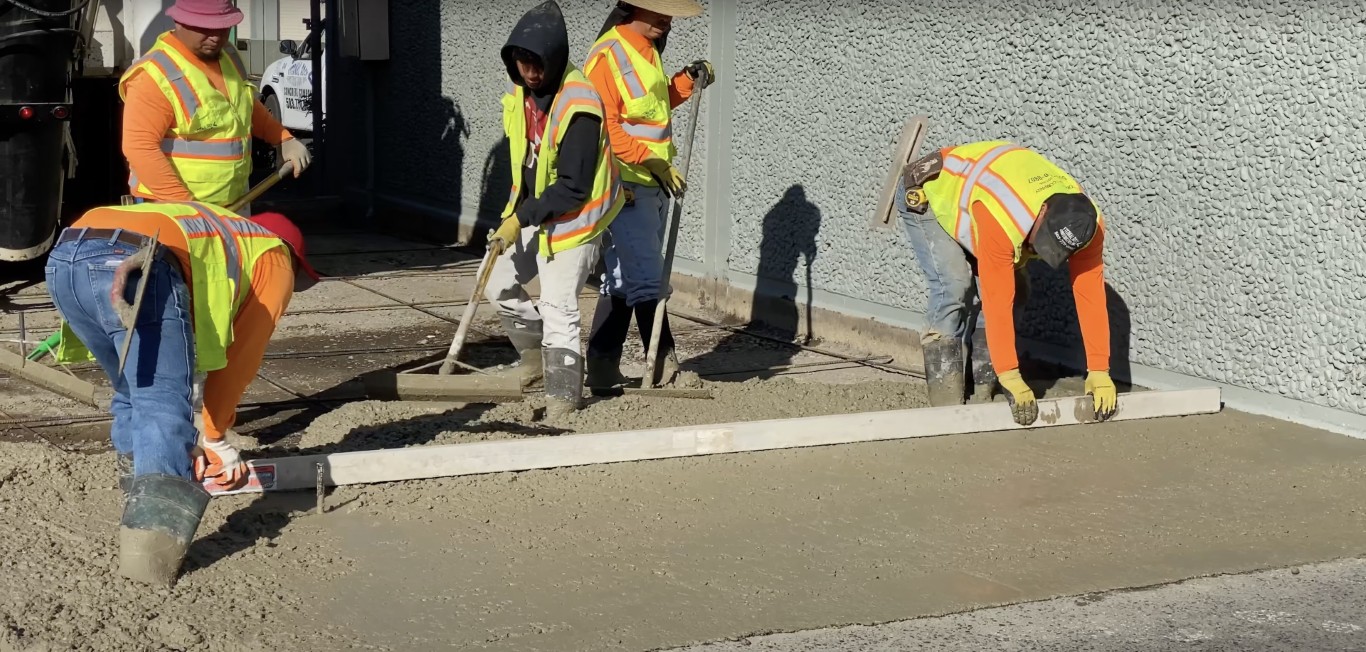
Concrete trucks arrive and we pump or chute concrete into forms. For walls, we pour in lifts and vibrate the concrete to eliminate voids around reinforcement. For slabs, we spread and screed the concrete level, then float and trowel the surface smooth. We ensure proper slopes for drainage. Control joints get cut or tooled into the surface. The concrete then needs several days to cure and gain strength before we remove forms and begin backfilling or framing.
Ready to discuss your foundation project? Contact our team for a consultation where we will evaluate your site and provide a detailed quote.