Get a durable, professional driveway that handles Maine winters and heavy traffic for decades.
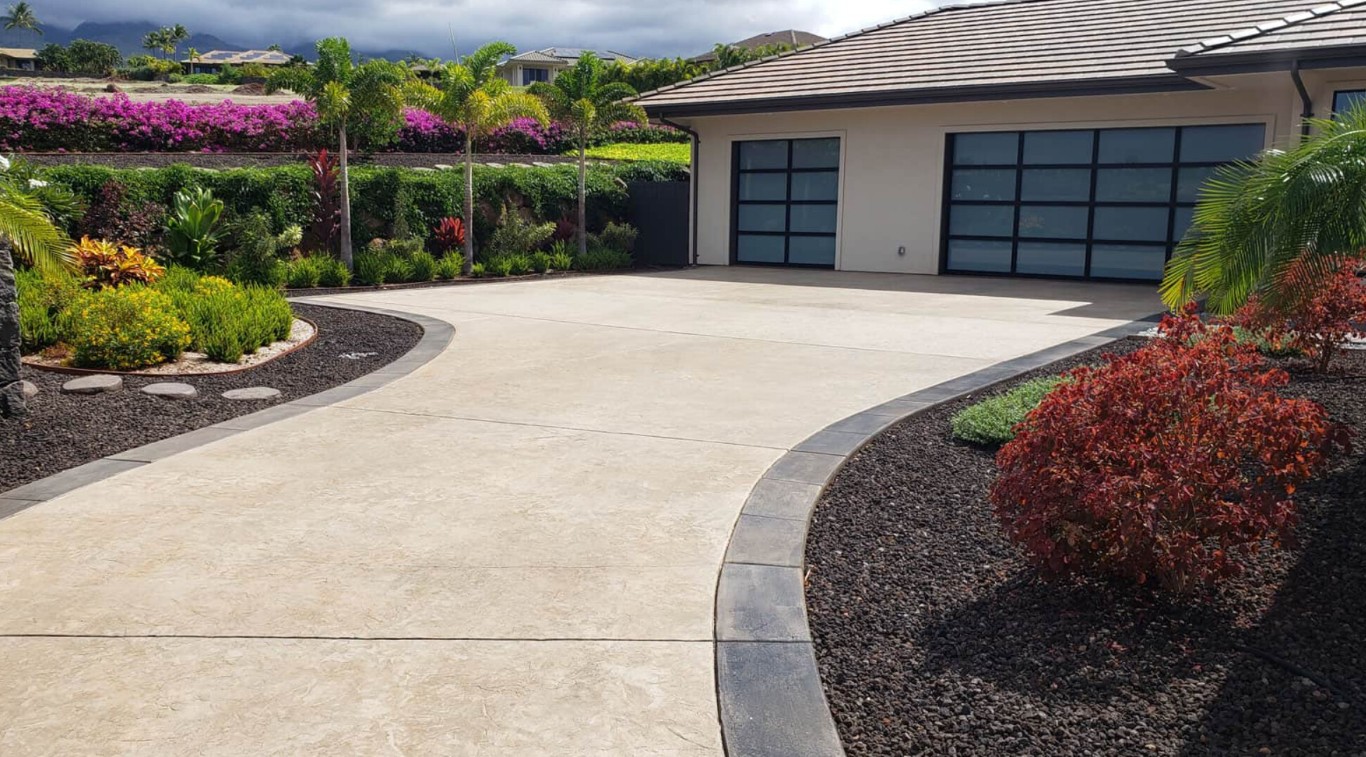
Your driveway takes a beating every single day. Cars weigh thousands of pounds, and they drive on your concrete in all kinds of weather. Winter brings freezing temperatures, ice, and snowplow scraping. Summer heat causes expansion. Spring brings water that seeps into cracks and freezes again next winter. A properly installed concrete driveway handles all of this without cracking, sinking, or breaking apart.
The difference between a driveway that lasts 30 years and one that cracks in 3 years comes down to proper installation. We start by excavating to the right depth and removing unsuitable soil. Then we install a compacted gravel base that drains water away and prevents settling. We use the correct concrete mix with proper air entrainment for Maine freeze-thaw cycles. Rebar or wire mesh reinforcement goes in at the right height to prevent cracking. We slope the surface so water runs off instead of pooling. Control joints go in at calculated spacing to manage natural expansion and contraction.
All of this work happens before and during the concrete pour. You cannot fix poor base preparation or incorrect grading after the concrete hardens. That is why choosing experienced contractors who understand local conditions makes such a big difference. Homeowners who take time to find the best concrete contractor for their project consistently report better results, fewer callbacks, and driveways that hold up far longer than those installed by less experienced crews. We have poured hundreds of driveways in Lewiston and the surrounding areas. We know how Maine weather affects concrete, what base materials work best in our soil, and how to build driveways that stay level and crack-free for decades.
Most concrete driveways take 3 to 5 days from start to finish, though larger or more complex projects may need additional time. Here is what happens during each phase of installation so you know exactly what to expect.
We start by removing your old driveway if you have one, or excavating the area for a new driveway. This means digging down 8 to 12 inches below the final surface level. All unsuitable material like topsoil, roots, or soft clay gets hauled away. Then we bring in crushed stone or gravel and spread it in layers. Each layer gets compacted with heavy equipment to create a rock-solid base. We check the base for proper slope and drainage before moving forward. This base layer prevents your driveway from settling unevenly and provides a path for water to drain away from the concrete.
Wooden or metal forms go in around the perimeter to contain the concrete and create clean, straight edges. We double-check all measurements and elevations to ensure your driveway slopes correctly for drainage. Steel rebar or wire mesh reinforcement gets positioned on supports so it sits in the middle of the concrete thickness, not on the bottom where it does little good. We inspect everything carefully because this is your last chance to fix issues before concrete arrives.
Concrete trucks arrive early in the morning when temperatures are best for pouring. We work quickly because concrete starts hardening within a couple of hours. The concrete gets spread evenly, then worked with vibrators to eliminate air pockets and ensure it flows around all reinforcement. Power screeds level the surface. Bull floats smooth out imperfections. We cut control joints while the concrete is still workable. Final finishing creates your chosen texture, typically a broom finish for traction or smooth troweled finish for a sleek look. The concrete then needs to cure undisturbed.
Concrete gains strength as it cures over several days. We remove the forms after 24 hours, clean up all equipment and materials, and sweep the area. You can walk on the driveway after about 3 to 5 days, but you should wait at least 7 days before driving on it. Full strength develops over 28 days. We provide specific care instructions based on weather conditions. Proper curing makes the difference between concrete that lasts and concrete that fails early.
Looking to enhance other areas of your property? Consider adding a concrete patio to create outdoor living space, or explore our stamped decorative concrete options for a high-end look.
You have more choices than you might think when it comes to your concrete driveway. The standard option is a basic broom finish, which provides good traction and costs less than decorative treatments. But many homeowners choose upgraded finishes that add visual appeal without sacrificing durability.
Colored concrete uses pigments mixed into the concrete or applied to the surface before finishing. You can match your home exterior or choose earth tones that complement your landscaping. Stamped concrete creates patterns that look like brick, cobblestone, slate, or other materials. This gives you the upscale appearance of pavers at a lower cost and with fewer maintenance headaches. Exposed aggregate reveals decorative stones within the concrete for texture and visual interest. This finish also provides excellent traction in wet or icy conditions.
The size and shape of your driveway matter too. Standard driveways are straight runs from the street to your garage, typically 10 to 12 feet wide for a single car or 20 to 24 feet for two cars. But you might want a wider apron at the garage for easier turning, a parking pad for additional vehicles, or a curved design that follows your landscape. We help you plan a layout that works with your property and provides the parking space you need.
Thickness depends on what will drive on your driveway. Standard cars and light trucks do fine on 4-inch concrete with proper base and reinforcement. If you park heavy work trucks, RVs, or boats in your driveway, we recommend 6-inch thickness for extra durability. The difference in cost is modest compared to the peace of mind knowing your driveway can handle the weight.
Ready to start your project? Contact our Lewiston concrete team today for a free consultation and quote on your new driveway.